“Long and short reveal each other.” ~Tao Te Ching
When I first started fishing, all my reels were spooled with monofilament, more commonly known as mono, which is an extruded filament of nylon that is very popular among anglers because of its low cost.
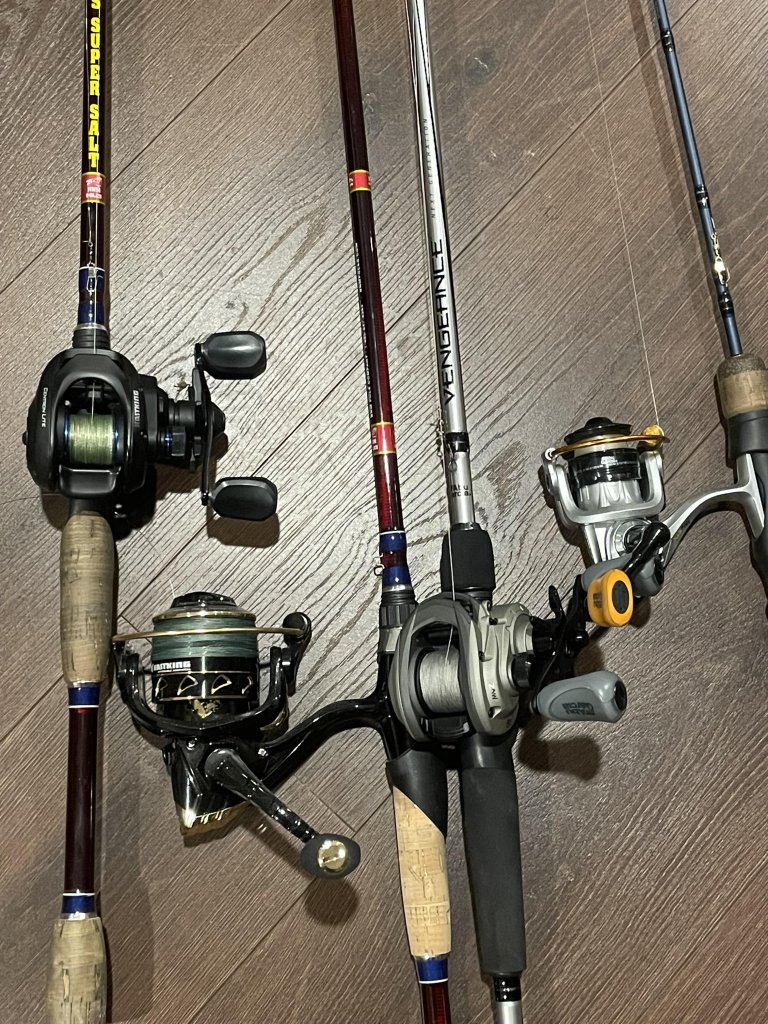
Many of my reels are still spooled with mono, but that being said, I now have several that are spooled with braided fishing line, typically referred to simply as braid.
As with everything in life, there are benefits and drawbacks to both of these types of fishing line, which I will unpack here. Here are the major things you should know.
Why Braid (and Why Not?)
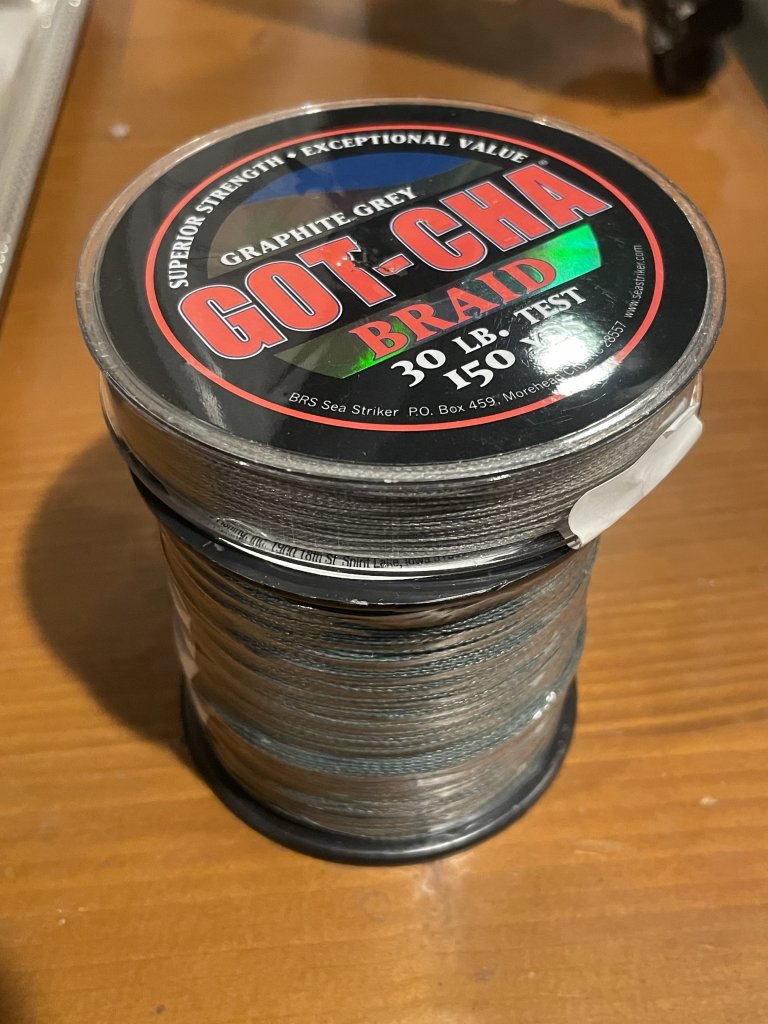
First, braided fishing line is made from woven strands of polymers, typically Dacron or Dyneema. Braid commonly is made of 4 or 6 strands, but it can be made from 8 or more.
There are numerous benefits to braided line; among the most significant of these is that braid has virtually no stretch at all. This makes it superior in situations in which a hard, sure hookset is needed, or in which fish are finicky and striking lightly. Braid is significantly more sensitive than monofilament.
Braid is also highly abrasion resistant and can tolerate a lot of a abuse, which makes it great when fishing among structure, or in heavy weeds. With a strong jerk you can often get braid to cut right through weeds and other vegetation. Because it is physically tougher, you can often get several seasons out of a single spool of braid, whereas mono rarely lasts more than one.
It is also the case that braided line has a greater strength to diameter ratio than monofilament. That is to say, thinner braid is stronger than monofilament of the same thickness, and often by quite a big degree. This means two important things: a reel will hold a greater capacity of braid, holding all else equal, and it will be able to cast further, because the thinner braid will put up less resistance.
For me, however, I think the single greatest element of braided line is that it has no memory. This makes braid a clear winner for spooling baitcasters (as well as my surf rods) because of the distance and accuracy it offers.
Many fishermen struggle to cast a caster spooled with mono because the mono has memory and wants to expand off the reel. I noticed when I started spooling my casters with braid that I was not only able to cast farther and more smoothly, but that I suffered fewer backlashes. Braid makes a caster significantly more forgiving than when it is spooled with mono.
So, to recap:
Braid is thinner and stronger than equivalent monofilament.
It has no memory.
It’s physically durable.
It has no stretch.
If it sounds like braid is some magic panacea to all the woes of fishing line, consider this:
Braid is more expensive than monofilament, often significantly so.
Braid is opaque, which means it shows up in the water, which can be a detriment when targeting wary or leader-shy fish.
The lack of stretch means that light braid will snap easily when subjected to sharp stresses.
When you do get a tangle or a backlash, it’s often impossible to get out and you have to sacrifice the affected portion of line.
It’s also worth noting that most braided line floats, which can be an advantage or a disadvantage, depending on what you are fishing. It doesn’t hurt topwaters, but it can affect the presentation and cadence of sinking lures.
That being said, I spool all of my casters and some of my surf reels with braid, because I can cast farther with braid on them.
What About Monofilament, AKA Mono?
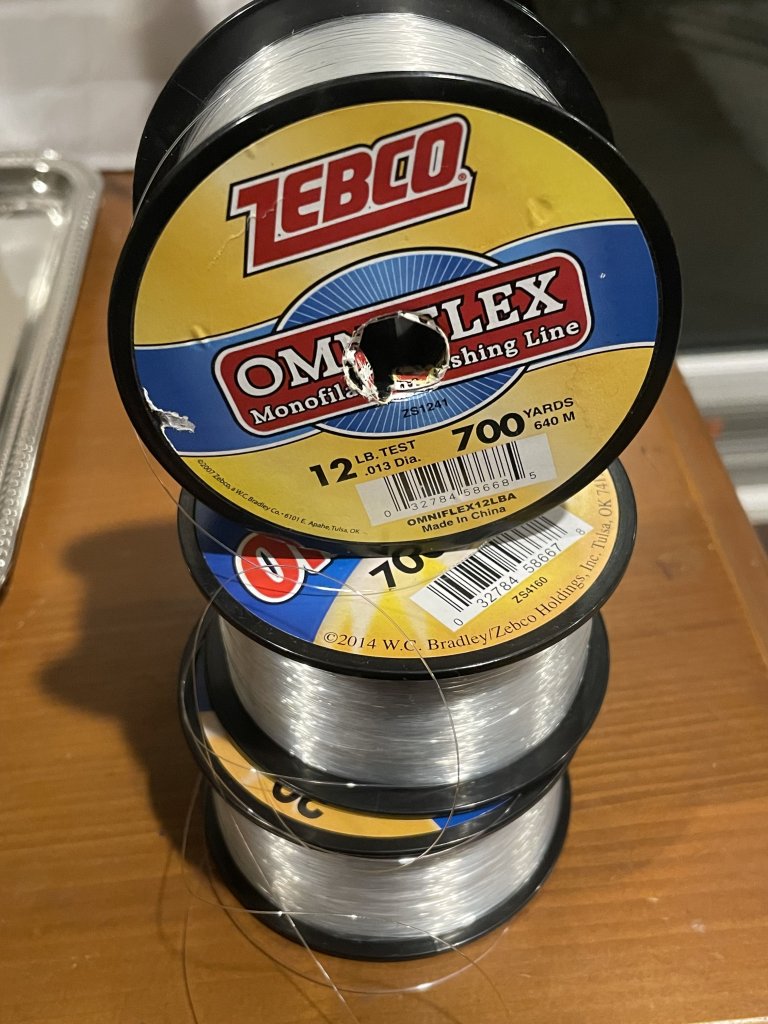
Monofilament, which is typically made of extruded nylon, is “everyman’s fishing line.” It’s what most of us learn on and chiefly because of its price, it remains highly popular.
The low cost of monofilament is absolutely the thing that makes it a winner. If I’m spooling spinners that get a lot of use, even abuse, I will often opt for mono. I won’t have a second thought about stripping and respooling a reel with mono, but it always gives me a little heartache to have to do that with braid.
Mono also has memory, which means that the line is actually a little easier to handle than braid. Most would say this makes it easier to tie knots with mono, but that advantage is also a curse when it comes to line twist and casting distance.
I also prefer to spool some of my ultralight spinners with monofilament, because it is cheaper and because it is possible to get monofilament in extremely light weights, such as 2lb and 4lb line. The lightest braid I’ve ever seen is 6lb, and at that weight, it’s too easy to snap the braid. This makes mono better for ultralight applications.
Monofilament also has the advantage of being stretchy. It will stretch significantly, which makes it better at absorbing stresses. It’s more forgiving of sticky drag systems, hard runs, and shocks than braid is. Often, braid will just snap, whereas mono will give a little.
This makes it better when targeting species that have fragile mouths, such as crappie, in which a hard hookset won’t just tear the hook out of the fish’s mouth, it will tear right through the fish’s mouth.
Another massive advantage of monofilament, and one that makes it clearly better than braid in some situations, is that mono is clear, and generally invisible underwater. This makes it much better when fishing in very clear water, or for fish that are wary and leader shy.
So, to rehash that all:
Mono is much cheaper than braid.
It’s nearly invisible underwater.
It’s stretchy, so it absorbs shock better.
It’s far more affordable.
Now, let’s take a closer look at some disadvantages of mono:
It is less physically durable than braid.
UV light breaks it down much more quickly. Mono usually lasts for one season at most.
Memory predisposes the line to twist and backlashes, although it’s easier to undo a knot in mono than braid.
The stretch makes it less sensitive.
It has a wider diameter in equivalent line weights, reducing spool capacity and casting distance.
As you can see, it’s not that braid is clearly better than mono, despite the higher cost. It’s more of a question of which reels you should spool with braid and which reels you should spool with mono.
Is There a Place for Both?
What I do with my braid-spooled reels is add a monofilament leader using a uni-to-uni knot, also known as a double uni knot. This offers some of the advantages of both line types; I get longer casting ability and greater sensitivity, plus the mono leader doesn’t spook leader shy fish. On top of that, if the leader gets frayed, I can just get rid of it and add a new mono leader. This protects the braid I have on the spool so I need to respool less frequently.
As for when you should choose which, choose mono if:
You are price sensitive.
You need to spool an ultra, ultralight reel (such as with 2lb line)
You’re a beginner and don’t need the extra sensitivity
If you are going after very wary fish, like trout.
You should however choose braided line if:
You are fishing a caster and want to deal with fewer backlashes.
You need the extra sensitivity of braid.
You’ll be fishing around a lot of cover.
You need to be able to execute longer casts.
And again, of course, you can do what I do, spool your reel with braid and tip the business end with a mono leader using a double uni knot. Then you get the best of both worlds.
A Note on Fluorocarbon
One more thing. Though most anglers probably use mono or braid, as I do, there is another type of line known as fluorocarbon, more commonly called fluoro.
Fluorocarbon, like mono, is made from a single piece of polymer. However, unlike mono, it is a lot more expensive. It also is not abrasion resistant, has basically zero stretch (which, like braid, means it breaks more easily) and unlike most mono, fluoro sinks. This makes it better for ice fishing.
Also, fluoro has a refractivity that is effectively the same as water. This means that it is not just barely visible in water (no matter the clarity) but effectively completely invisible. This makes fluoro one of the best options for extremely wary species.
However, because of the price and low abrasion resistance of fluoro, it is usually reserved for a leader material. For what it’s worth, I have no fluoro on any of my reels. Between mono and braid I can get the job done without it.
Tight lines.
~The Eclectic Outfitter.