“To every thing there is a season.” Ecclesiastes 3:1
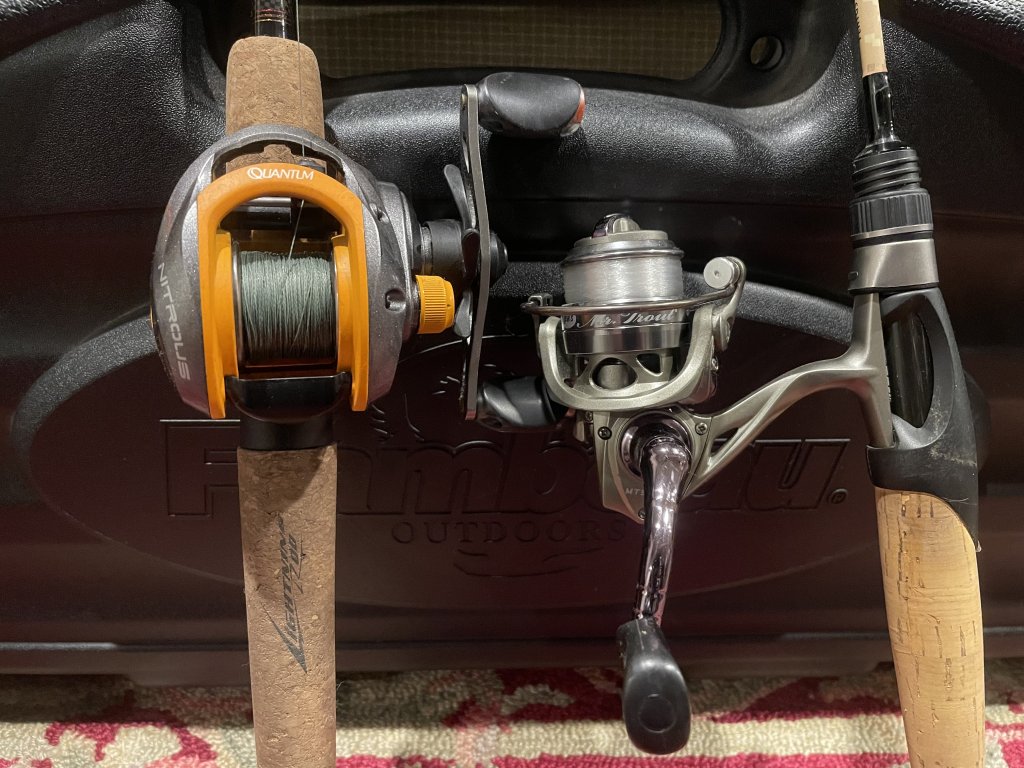
Most fishermen, regardless of the age at which they start, learn to fish either on a spinner or a spincaster. Both of these are relatively simple mechanical devices associated with a fairly short learning curve.
For those that do learn on a spinner, a baitcaster is generally viewed from a position of some combination of awe, reverence, and intimidation. I know that was the case for me, but there was some envy mixed in.
Casters were sleek and cool, and anglers that used them had the vibe of professionals. I wanted to learn how to use them, and so I did.
As it turns out, it wasn’t all about image. There are some performance attributes and general capabilities that baitcasters can offer that spinners can’t match.
But, as is often the case, the reverse is also true. Baitcasters can do some things spinners can’t, and spinners can do some things that casters can’t.
One is not better than the other. Most serious anglers will have both casting and spinning tackle in their arsenal.
That being said, this post should help you break down some of the relative advantages and disadvantages associated with each.
The Benefits of Baitcasters
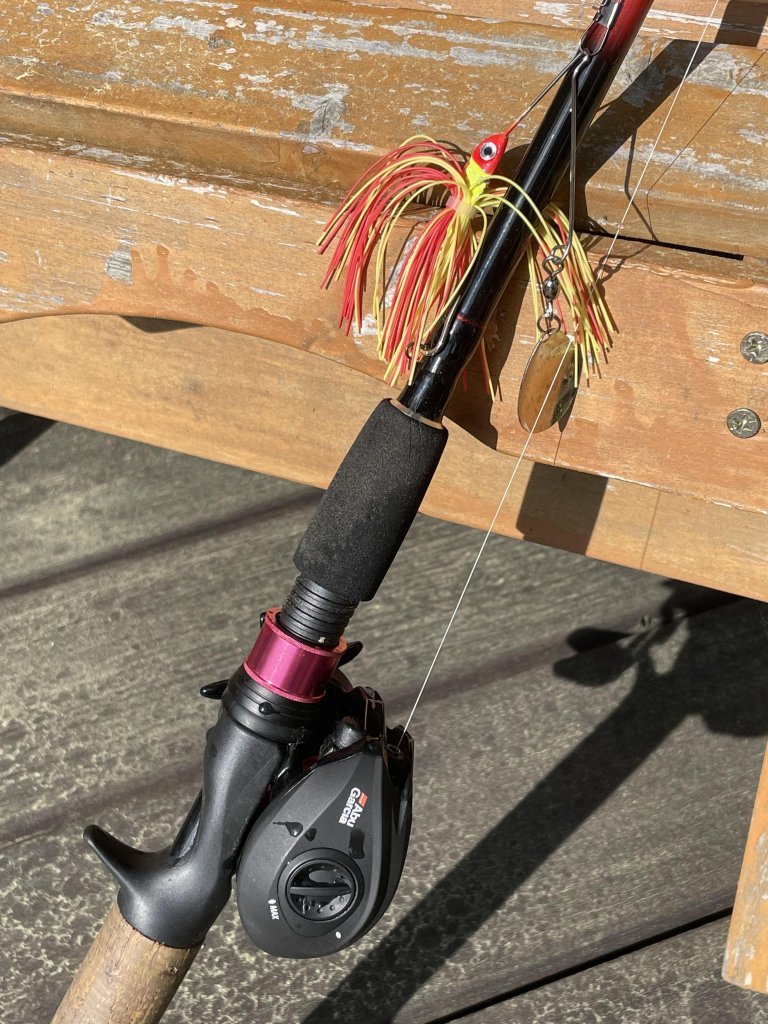
Baitcasters offer some unique advantages over spinners that are not readily apparent unless you either know someone that fishes with casting tackle, or once you pick one up and learn for yourself.
The main thing you will notice about casters is that, with practice, and once you become proficient, they can cast far more accurately than spinners. You can become an expert marksman with a caster, accomplishing accuracy that is effectively impossible with a spinner.
Learning to brake a spinner can make you more accurate, but you still won’t be able to match the rifle-like accuracy of a caster. It is also true that casters are more precise finesse equipment than spinners, and can drop baits with great delicacy, producing less splashdown, if you so desire.
Casters also tend to offer much more cranking power than spinners, and they usually have more robust drag systems as well. This is not true unequivocally, but more often than not, it is the case. This is one of the reasons that most big game reels, such as those used for musky and catfish, as well as offshore fishing, are conventional reels.
Another great thing about casters is that, even when the drag system does start to wear out, you can supplement the drag by thumbing the spool. In fact, even if there were no functional drag at all, by thumbing the spool you could apply pressure to a fish to wear it out.
Where They’re Not So Hot
Even though there are significant advantages associated with casting tackle with respect to power, accuracy and control, there are some equally large drawbacks.
The first one is the skill required to use a caster. You can become pretty proficient with a spinner in the space of a single morning. With a caster that is unlikely to be the case.
Don’t get me wrong, it’s not that casting a baitcaster is rocket science. But it does require a set of certain skills that must be honed. You cannot just pick up a caster and cast. You must learn to thumb the spool as you cast, applying just the right pressure to allow the lure to get where you need it to without overrunning and creating a backlash. For this reason, baitcasters often frustrate novice anglers.
The long and short of this is that it takes a lot of practice to become adroit with a caster, and if you aren’t careful, you’ll easily get a backlash.
Baitcasters also struggle with very light lures. I know there are finesse guys out there who cast lures that are ⅛ ounce or lighter with casting tackle, but for me, once the lure drops beneath ¼ ounce, I’m fishing that thing on a spinner. I can cast lighter lures with a caster, but trust me, it’s not easy, and it certainly isn’t worth it.
Another drawback to casters is the cost. There are some affordable baitcasters out there, but as a general rule, if you look at two reels, a spinner and a baitcaster of relatively comparable performance, pickup, number of bearings and max drag, the caster will cost more, and often significantly so.
So Why Sling a Spinner?
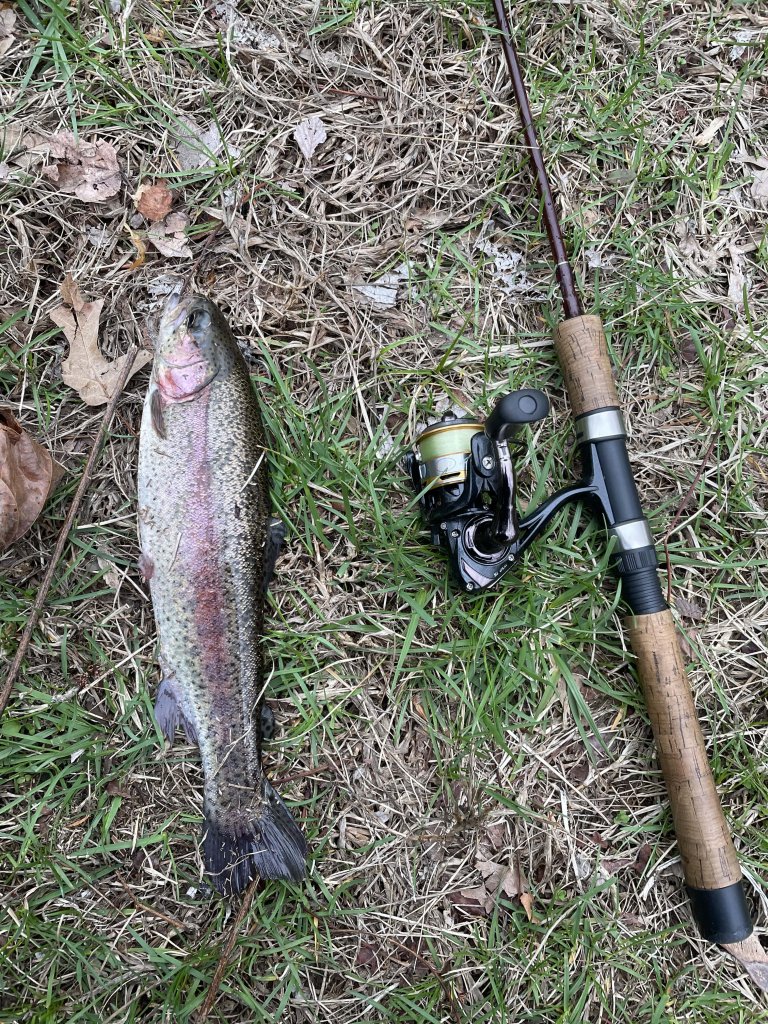
Now let’s cover some of the reasons why, as much as I love my casting tackle, there are still spinners in my collection, and there always will be.
The main reason I have and use spinners is that there are some things they can do that casters cannot. It doesn’t matter how many brakes with which you equip a caster, a spinner is going to do a better job of casting ultralight lures, and by ultralight, I’m talking less than ⅛ ounce. When I’m throwing really tiny, 1/32 ounce jigs for panfish, or ⅛ or smaller spinners or spoons for trout, it’s a spinner every time.
Only spinners release line smoothly and easily enough to accurately cast very tiny lures like these – end of story.
It’s also easier to learn how to use a spinner. Though I fish a caster often, there are days when I just don’t feel like doing it. I often fish for bass with a caster, but there are some days I just want to use a spinner just because it’s easier and I don’t need to get as athletic with my casting.
When casting a spinner, another significant advantage is that it is very difficult, effectively impossible, in fact, to suffer a backlash. As long as you don’t have a lot of twist in your line, if your casts are clean and it isn’t that windy, you can cast all day long without getting a bird’s nest. The same is not true for a caster.
Also, as stated, spinning tackle tends to be considerably more affordable than casting tackle. There are really high quality spinning reels you can get out there for between 20 and 50 dollars. The same is rarely true of casters, unless you find a good sale or a killer clearance deal, which does happen, but it is the exception, not the rule.
The Shortcomings of Spinners
The disadvantages of spinners have already been covered in a roundabout way, but to cover them again, the main one is that they don’t offer the same accuracy or power as casters. When it comes to distance, that’s a wash. Both casters and spinners, equipped with appropriate, matching line, can cast far. Spinners win with light lures but otherwise it’s even.
Again, the drag systems of casters tend to be superior to spinners, and if the drag on a spinner starts to slip, there isn’t much you can do without making a full scale repair. There’s no way to thumb the spool to supplement the drag, as you can do with a caster.
To Rehash That…
To keep this as succinct as possible, here are the advantages of casters:
Provide better casting accuracy.
Greater control and usually more robust drag systems.
Flexibility to thumb the spool if the drag slips or fails.
Compared to their disadvantages:
They’re more expensive than spinners.
They’re harder to learn to use.
They struggle with lighter lures.
Many anglers have a hard time casting them without generating backlashes.
Followed by the advantages of spinners:
They’re easier to learn to use and more forgiving.
They’re better with lighter lures, period.
They’re more affordable.
They’re easy to cast without suffering a backlash.
And their disadvantages:
They’re not quite as accurate as casters.
If the drag fails the reel is out of commission until repaired.
Every Collection of Tackle Should Have Each (and More Than One)
At the end of the day, given the unique advantages that each of these categories of reels has over the other, there’s justification for you to have one (or several, like me) of each.
I use casters when fishing heavier lures in both fresh and saltwater. Primarily my bass rods in freshwater are pretty much all casting outfits, as are my fluking outfits that I use in saltwater.
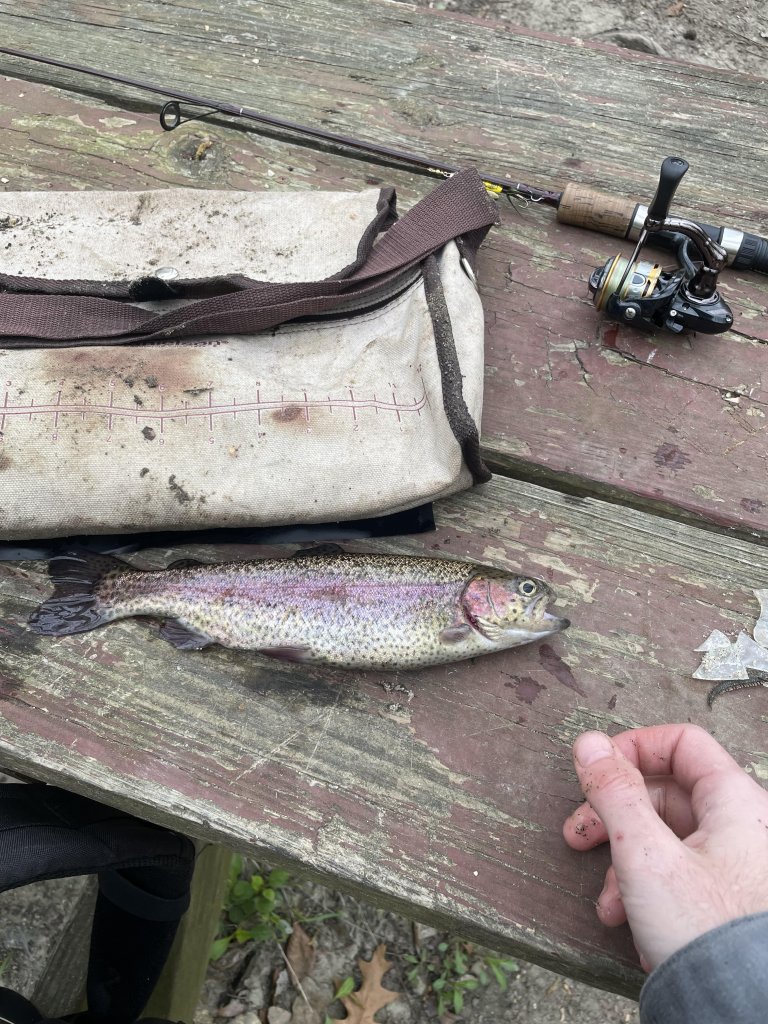
I use spinners whenever I’m presenting very tiny lures. As a result, my trout and panfish rods are all spinners, as are many of my lighter outfits in saltwater.
At the end of the day, there is a time and a place for each. Hopefully you found this breakdown helpful and if you have any misgivings about learning to use a baitcaster, you overcome them and master the caster.
Tight lines.
~The Eclectic Outfitter
you didn’t really talk about BFS systems.
Yes, and? I didn’t say I was going to. Get serious.