“Dig deep within yourself, for there is a fountain of goodness every ready to flow if you will keep digging.” ~Marcus Aurelius
Until recently, I only fished and hunted. That left trapping and shellfishing, which most people refer to simply as clamming.
For personal reasons trapping is not of interest to me, at least not at this point in my life. But there are few things I love as much as fresh shucked clams on the half shell, so for years now I’ve been wondering why I never sucked it up and figured out how to clam.
It could have been that my state has onerous legal regulations regarding when and where you can clam. Just clamming in the wrong place or at the wrong time can have serious consequences.
It could have also been that I just had no idea where I could possibly start. I’ve never done it and I don’t know anyone that does it. But I spend days on the marsh in the summer catching crabs and I spend days in the woods in the winter kicking up birds and stalking squirrels, so I knew it could be done.
On top of that, I’m the first person in my family to hunt, so I had to teach myself that. It was a matter of time before I became a clammer.
This past year I did just that. You can learn from my experience. Don’t be intimidated. There are clams (and other shellfish) out there in abundance, just waiting for you to harvest them. Hopefully, this short post will help you fast track your way to success.
Where to Find Clams
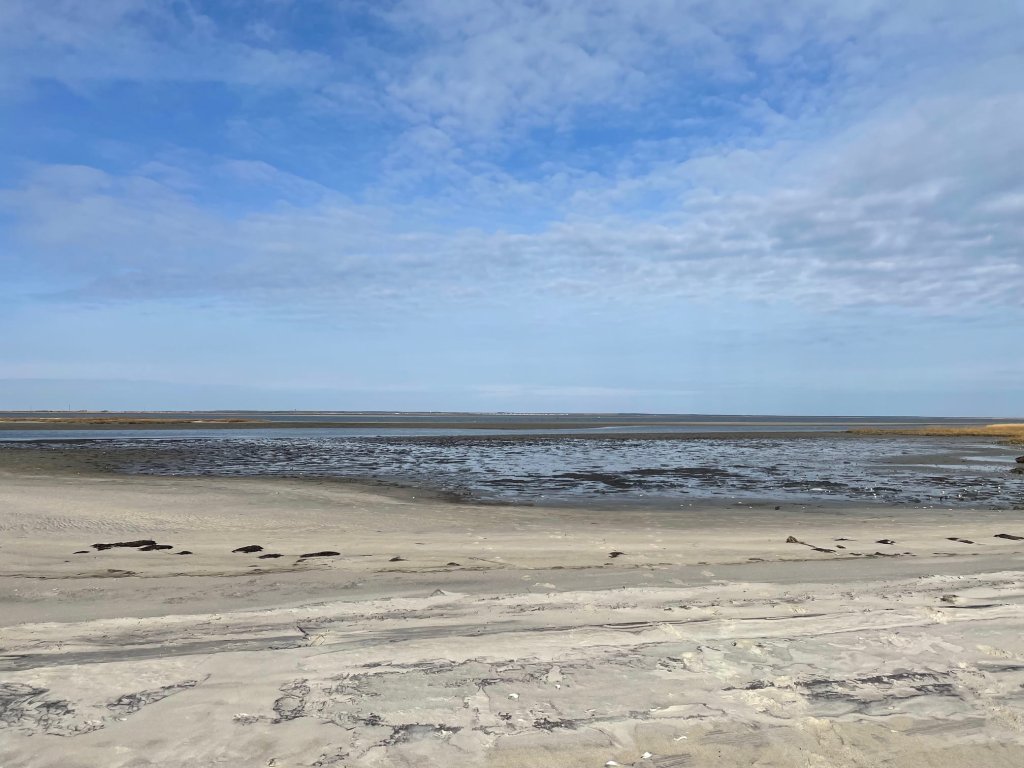
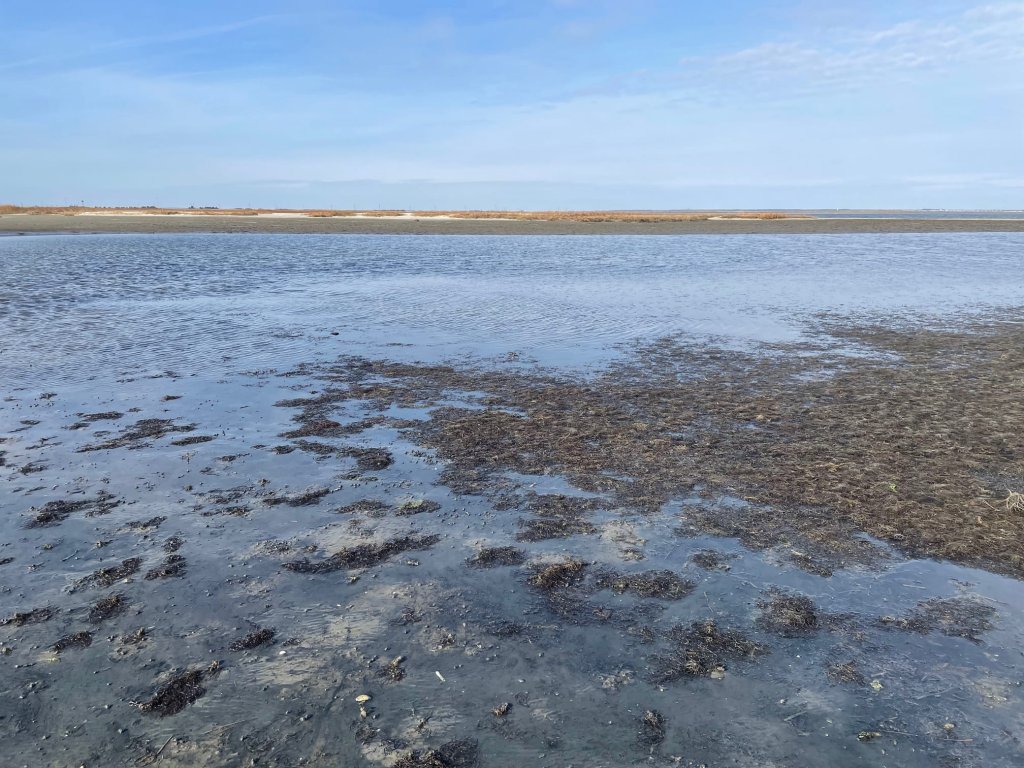
First, you need to know where to look. Clams prefer a muddy bottom, but from what I have seen, you can find clams in both mud, sand, and a mix of both.
My experience, however, is that clams prefer mostly muddy substrate. You also aren’t going to find them (or at least you won’t find many of them) above the mean high water line. Clams need water to survive, but I think the largest concentrations of them, at least to be taken by clammers using hand implements, is in the intertidal zone.
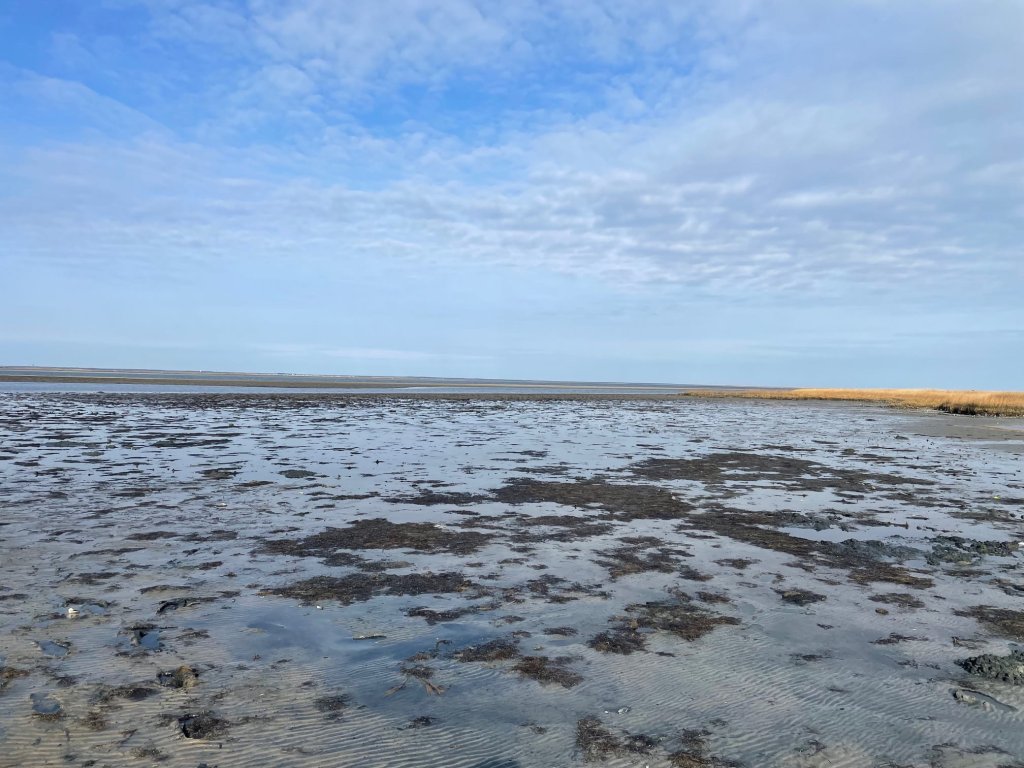
That is, you’ll find clams in the mud where it’s dry at low tide and flooded at high tide. There will be clams in deeper water, to be sure, but they’ll be harder for you to get to. You can dig up clams in the mud that’s dry at low tide but submerged at high tide, or you can wade out a bit at low tide, up to your waist or chest, and dig there. You will find clams in both places; I have.
Based on my experience, that’s pretty much all there is to this. I thought it was going to be a lot harder than it actually is to find clams. Find the mud and you can find them.
This part is also important: make sure that where you are clamming, it is legal to do so, and not just for the sake of the law.
For one thing, my state requires a license. It also maintains a database of places that you can and cannot clam, and some of these boundaries change with respect to time of year.
Leave alone the fine. Apparently, the state monitors the pollutant concentrations in the water, and that’s the reason that only some areas are approved. Don’t risk disease or poisoning; make sure clamming is permitted where you intend to go.
When to Go?
There are two ways to approach this: time of year and time of day.
First let’s consider time of year. Assuming you are looking at a parcel of land that is approved for clamming and that there are clams there in the first place, you can find them all year.
However, I recommend the winter, and have several reasons for this. One is the weather. Digging up clams is hard work and you will be wearing waterproof gear. You’re going to bake in the summer. I’ve been so hot doing this, in below-freezing temperatures, and up to my waist in half-frozen bay water, that I needed to strip layers to thermoregulate.
The other reason is that you will invariably run into fewer people on the water in the winter, so you have a better chance of having the outdoors to yourself.
Now, for the time of day. For clamming, you’re pretty much bound to the schedule of the tides. Go at low tide, or an hour or two before dead low, that way you’ll have the most time to spend digging up clams.
What You Need
As the outdoor activities that I love go, clamming is about as low tech as they come. You won’t need any (well, hardly any) of the tackle you’d need to fish or hunt or even crab.
There are pretty much only three pieces of gear that you’ll need for actually gathering the clams, and only one of these is absolutely necessary.
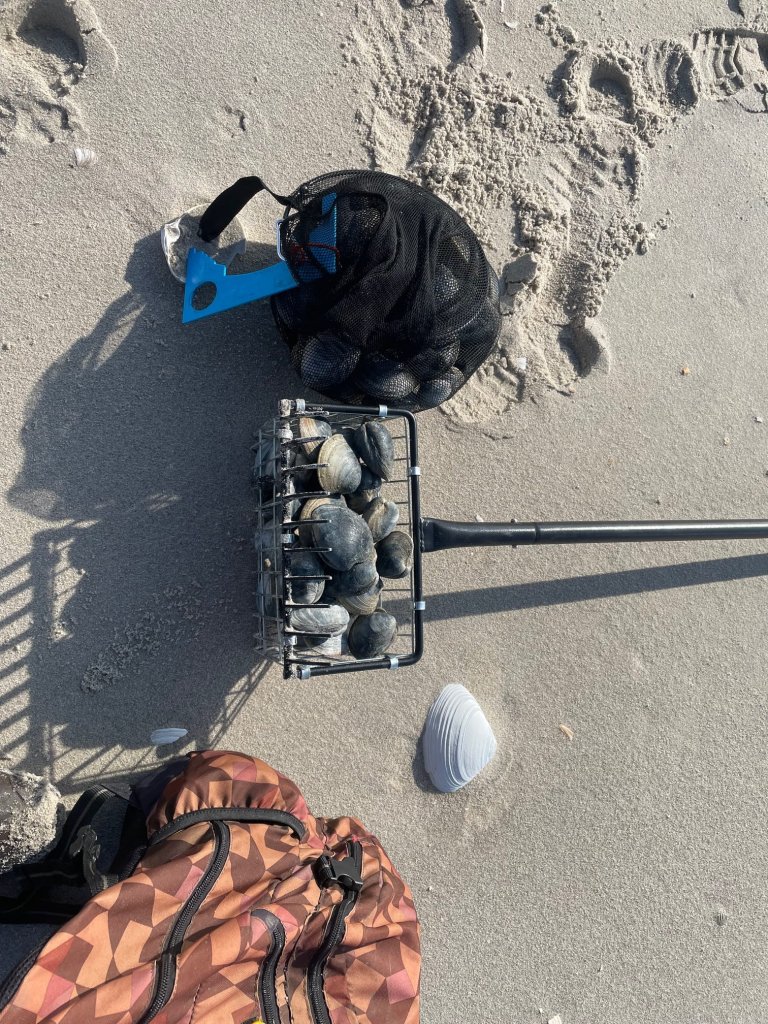
First we’ll start with what you should have, and that’s a clam rake. Some people bury their feet in the mud and “tread” for clams, but I think a rake is faster, safer, and more effective. Plus I hate being wet.
A good clam rake will have long tines and a deep basket so that you can get down deep in the mud, lever up clams that are down there, and then wash them out in the basket before you harvest them.
This is the one piece of equipment I would not be without whenever I go clamming.
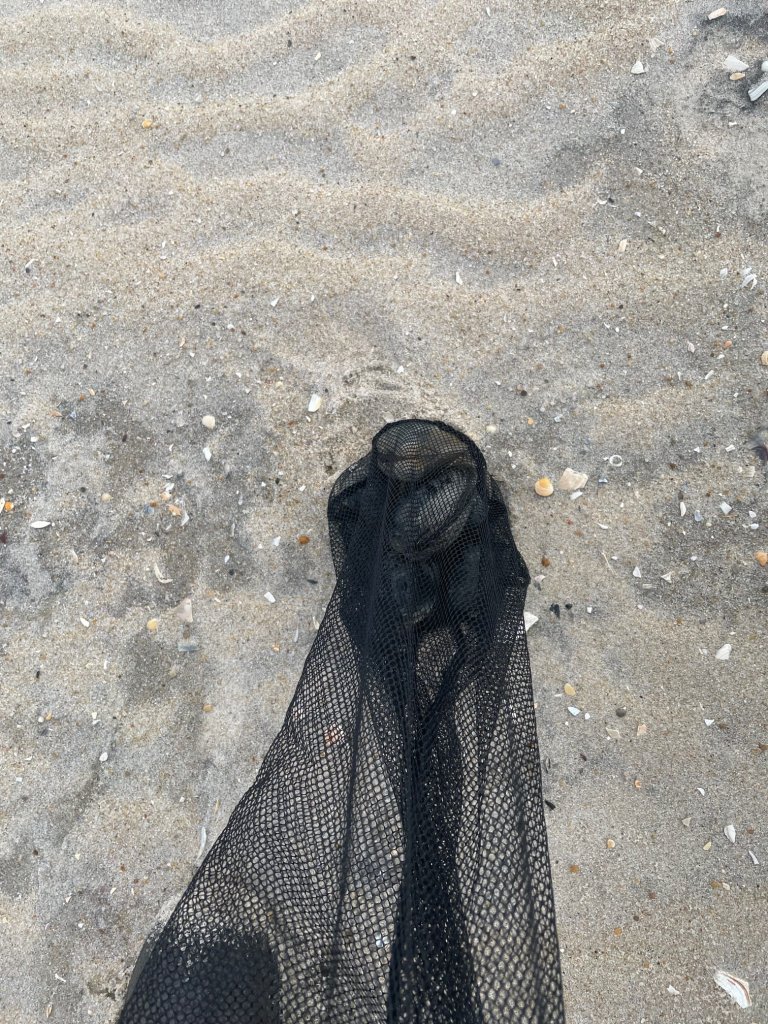
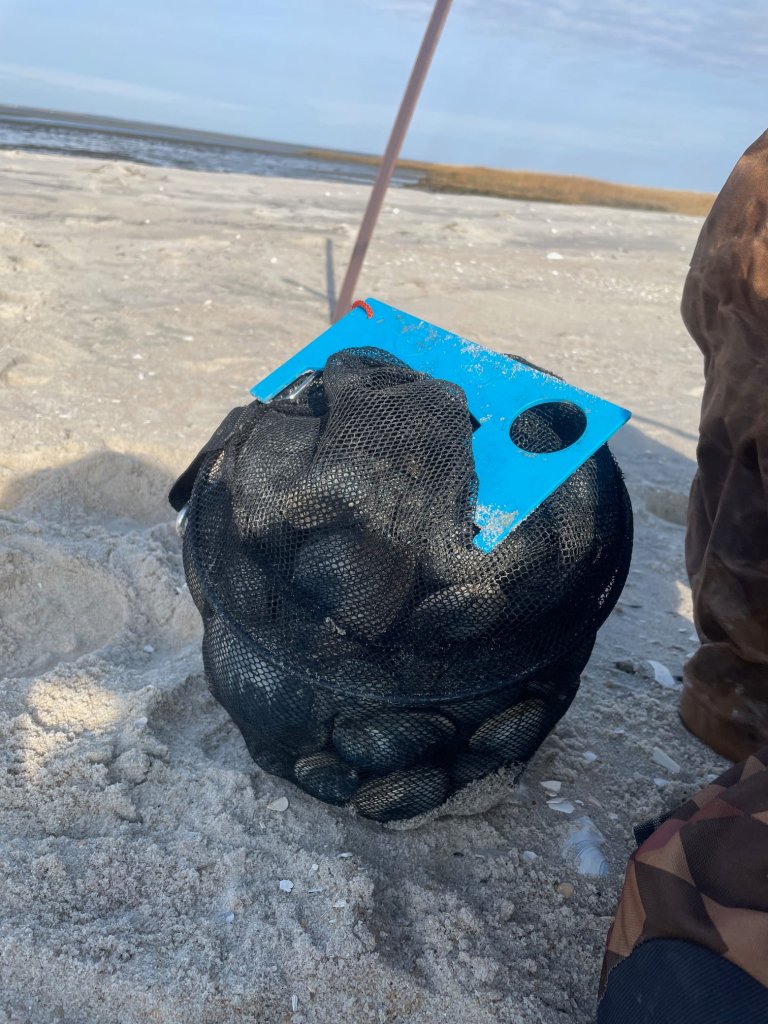
The other two things you will want are a net (or a basket) and a clam gauge. I use a nylon net which I clip to my waders with a carabiner. It is long enough that it keeps my clams wet whenever I am wading. It also lets them breathe.
The clam gauge is a little plastic tool that I use to measure clams that seem on the smaller side. In my state, there is a size limit of 1.5” for hard clams. If the clams can’t pass through the gauge, they’re big enough to keep, and into the net they go.
That being said, there is more to clamming than a rake and a net and a gauge, at least technically.
I also suggest getting a good pair of waders with lug soles. Both insulated neoprene waders and thinner PVC waders are fine. This last season I’ve used a lighter, uninsulated pair because it lets me layer more efficiently, and because I tend to get hot when working even when it’s below freezing.
The waders will keep you dry and more comfortable as you’re digging, especially if you’re wading, and if you have a wading belt on them, you can clip your clam net to this.
Obviously, you should be properly dressed (more on this in a minute). I also recommend waterproof neoprene gloves to protect your hands, sunglasses, and any other gear you’d take crabbing or surf fishing, including basic tools like a knife, pliers, and so on and so forth.
But as for the actually clamming gear necessary, that’s all there is to it.
How to Dig Them Up
Once you find a place where clams live (mud) at low tide, you literally just need to pick a patch of mud and start raking.
Sounds easy, and in concept it is, but I learned the hard way that clamming was some of the most physical work you could do outdoors. Only splitting wood comes close. I thought busting brush pheasant hunting without a dog was hard; that is, until I started clamming.
Make sure you let your tines fall hard. You want to get them as far down in the mud as you can. When you draw the rake back, the tines will want to walk back up to the surface of the mud. Therefore, you will need to take short, abrupt strokes through the mud, rather than long, sweeping strokes.
Don’t let the tines run too shallow. There are clams that will only be an inch down, but there are others that will be down 8 inches or more. If you don’t dig deep enough you won’t find them.
After a few passes, you’ll feel the tines clink into something. You’re going to think it’s a rock. It won’t be. It’s almost definitely a clam. Mark it, strike your rake down into it, then lever the rake handle upwards to pry the clam out of the mud. Get under it, lift it, let it fall into the rake’s basket, then flip the rake over and shake the basket in the water a few times. This will help clean some of the loose mud off the clam. Measure the clam if necessary, then drop it in your net.
Congratulations, you’re a clammer.
Being Prepared for What Awaits
Assuming you’ll be clamming in the winter as I suggested, you should prepare accordingly, especially if you don’t like the cold (I do).
One, make sure you wear layers. This way, if you do get too hot, you can shed them so you won’t get overheated and soaked with sweat, which is actually quite dangerous in very cold conditions.
I also suggest you wear wool clothing. I have written before about why your clothes should be wool but the long and short of it here is that if wool gets wet it retains most of its insulative properties. Since you will be working around freezing water, this can be a lifesaver.
One more thing: gloves. I may love the cold and be fairly tolerant to it, but one part of me that gets cold is my hands, especially when it’s below freezing to begin with and they get wet. I recommend a pair of waterproof neoprene gloves that are well padded so sand and silt won’t wear through them easily.
Time to Crack Out the Clam Knife
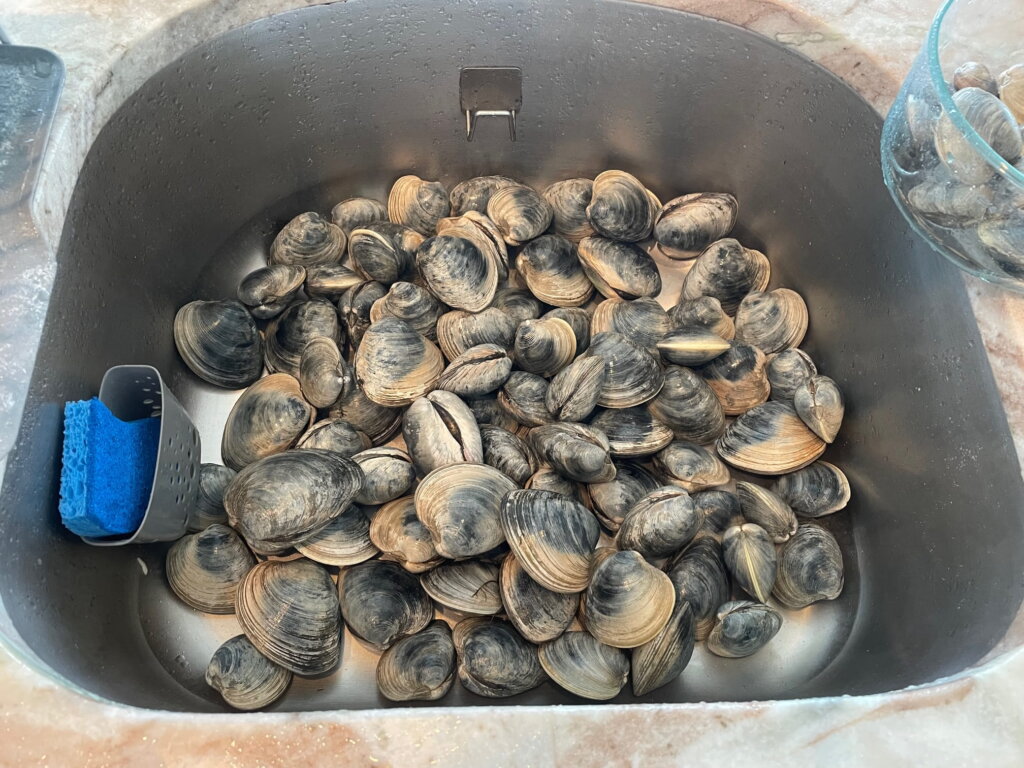
Put all this into practice and hopefully before long you’ll have a net full of clams and be well on your way to a platter of fresh shucked clams on the half shell. Clamming may be time intensive and physically exhausting, but I do promise one thing. They will be the best clams you’ve ever had.
Stay safe and happy clamming, those clams aren’t going to dig themselves.
~The Eclectic Outfitter