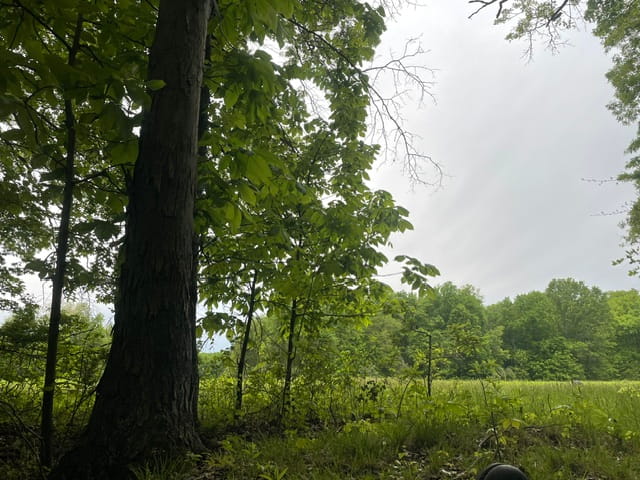
“The wise speak only of what they know.” ~Tolkien
There are some who would hang me out to dry, if not discredit me entirely, for making this article about squirrel hunting with a shotgun or an air gun, rather than a .22. There are some hunters that wouldn’t even dream of hunting chicken of the tree with anything but a rimfire.
My state does not allow rimfire hunting for squirrels, but I learned to hunt the venerable aforementioned chicken of the tree, and I have filled the vest before many times with a shotgun, and I’ve taken a few with an air gun, too.
There are very strong advantages to both. Hear me out and then decide for yourself if next fall you’d rather dust off the shotgun or air gun instead of the .22.
The Case for the Scattergun (and the Drawbacks)
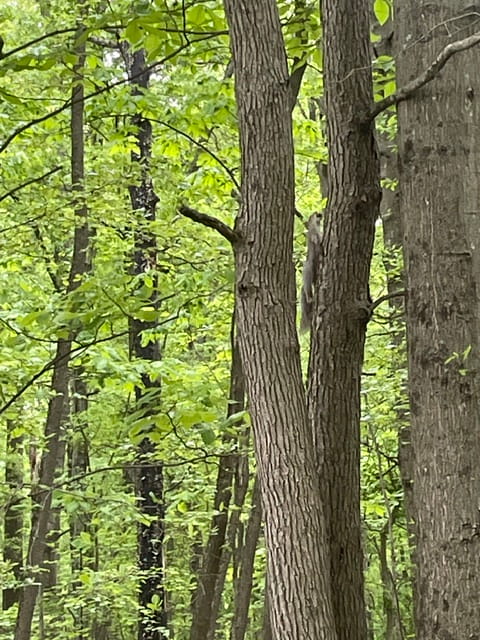
First off, for beginner hunters, there is no better squirrel gun than a 12 gauge, despite the recoil. I don’t want to say that squirrel hunting with a 12 gauge is easy, but I’ll put it this way. Pursuing a bushytail with a 12-gauge is the hunting world analog of catching bluegill with corn in a pond. It’s about as basic and beginner-friendly as it gets.
The shotgun is forgiving; a 12 gauge throws a wide spread, and you don’t have to be a sniper to deliver an ethical, clean shot. With appropriate shot this is even more the case. I personally don’t recommend hunting squirrels with anything smaller than 5 shot. An old timer at a gun shop once swore to me up and down that 7.5 shot were all you needed. I bought a box; the next day was opening day, and let’s just say I will never do that again. It’s 5s or nothing for me. Squirrels are tough, and I won’t take anything that’s not an ethical shot.
Anyway, I digress. Shotgun hunting for squirrels is about as “point and shoot” basic as it gets. You can either stay put, call them, or still hunt them, and when you get a shot, you just drop the bead on the front half of the limb chicken and drop the hammer. That’s all there is to it. Plus, with a wide pattern, the 12 gauge is accommodating of beginners who rush shots or have sloppy aim, or just poor mounts.
Then again, the 20 gauge and .410 are also respectable alternatives, and they produce little recoil. The 20 gauge is, in my opinion, perfect because it throws a pattern almost as dense as a 12 gauge, and produces less recoil. Experienced shotgunners should opt for the .410. It is not forgiving. Believe it, it is very easy to miss with a .410, and you want to harvest, not wound, your quarry.
The other thing about shotguns is that they’re great for taking a shot on a moving target. A squirrel sprinting over the leaf litter or over a log, or else leaping from limb to limb in the treetop is not so different, as a target, than a bird on the wing. It is moving, fast, and it is hard to hit. With a scattergun (and some practice) you can confidently take shots on – and dispatch – a moving target.
Shotguns also have a lot of knockdown power and air guns don’t. Early in the season, when there is still a lot of foliage in the trees, you might only get some half-windows at a target like a squirrel. A shotgun can punch through light cover, and enough of the shot can make it to a target to execute a clean dispatch.
On the note of knockdown power, if you get a good shot on a squirrel, with appropriate shot size and at a suitable range, it’ll be a clean harvest. With good shot placement (can’t believe I’m talking about “placement” with a shot string here) a squirrel will be cleanly dispatched.
Now that’s all there is that’s great about shotgun hunting for squirrels, but the truth is that it’s not all positive. There are indeed drawbacks, and this is where the rimfire hunters are going to start telling themselves, “See, I told you so,” in my direction.
For one, shotguns are very loud. When you shoot, the woods will get quiet and most of the time squirrels will scatter. You will not get another shot, most of the time, for several minutes, and in pressured areas, you may not get another shot for the rest of the day while the squirrels know you’re there.
Another is that shotgun hunting, for lighter-framed hunters, is punishing. The recoil from a .410 is not so bad, but shooting with a .410 is laborious, and as I indicated, it is quite easy to miss. Recoil from a 20 or 12 gauge is not altogether insignificant.
Then there’s the price of ammo. Upland game loads have increased in price by a factor of more than four since I started hunting, and that was barely ten years ago. Truly the increase in price is utterly mind-boggling.
And here’s perhaps the biggest one of all. Shotgun hunting is a sloppy affair. We hunt birds with shotguns not because we like to pluck shot from the meat, but because hitting a bird with a rifle is a skill that most hunters would not be able to perfect with even a lifetime of practice.
And so, landing a shot on a squirrel with a scattergun results in more work for the hunter, and at close ranges, will damage some of the meat. This is why, regardless of gauge, you should not take a shot at a squirrel within say, 12-13 yards, at the extreme minimum.
Shooting a squirrel with a shotgun also will make it harder for you to skin and clean the squirrel, because where the squirrel is perforated, it will be hard to get the skin off without pulling the skin apart. If you don’t believe me, ask a hunter you know.
So, there are positives to squirrel hunting with a shotgun, and plenty of negatives. Does that make an air gun better? Let’s take a closer look at some of the advantages.
Where the Air Gun Wins
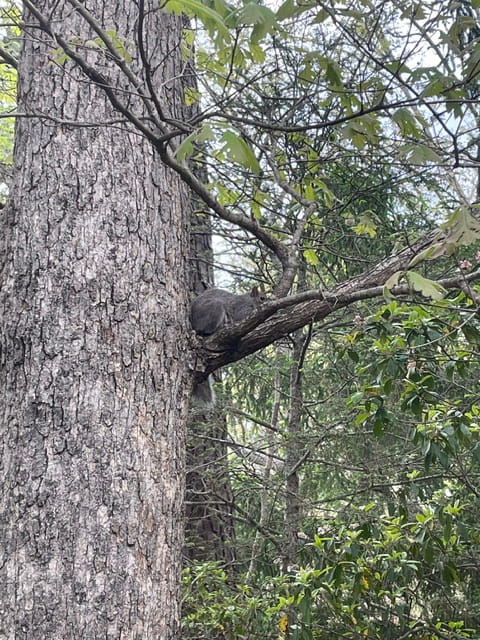
Ultimately, I prefer shotgun hunting for squirrels simply for the ease of the affair. But there are times that I intentionally pursue them with an air gun, and there are many good reasons that I do.
One is the sport of it. Stalking and then shooting a squirrel with an air gun makes you feel like a hell of a sniper. The target is small and you need to be amazingly steady to hit it. The vital area of a squirrel, if aiming for the head, is hardly the size of a dime. If aiming at a squirrel’s center mass, the vital area is still hardly bigger than a golf ball. Honestly, it is smaller. There is no room for error. You need an accurate air gun, sighted in properly, and a steady hand. The slightest movements from you will make the reticle quiver unacceptably.
What I’m saying is the enjoyment of the hunt is unmatched. It’s much more gratifying dropping a squirrel in the game bag that’s been harvested with an air gun than one that’s been taken with a shotgun.
The economy or air gun squirrel hunting is far better, too. Whereas it costs me on average more than 50 cents, and in some cases, close to a dollar, for each 5-shot shell I cast away on a squirrel, the pellets I use with my .22-cal air gun are much more affordable. They still only cost me a few pennies. For a few dollars per year I could theoretically limit out every day of the season. I’d go broke doing that with my 20 gauge. Forget the .410. Shells were a dollar apiece when I started hunting with that. I don’t even want to look at the prices now.
Discretion is also a solid win for the air gun. You can shoot an air gun in a copse of feeding squirrels and within minutes you might get another shot. They might not even stop their chatter when you shoot. The air gun is quiet; the shotgun is not.
There is also, as I mentioned, the risk of damage to the meat. With a good shot on a squirrel with an air gun, you will have none of that to worry about. Compared to a shotgun, an air gun does little damage and will not make it any harder to clean the squirrel. There’s no contest here.
But the air gun is not all sunshine and rainbows, despite these very considerable advantages. The biggest shortcoming is probably the difficulty. Squirrel hunting with an air gun is anything but a beginner-friendly pursuit. Getting close enough without getting busted is hard, and every yard farther away you are increases the chances of a miss.
In fact, it can be downright frustrating. Getting close to cautious squirrels is bad enough. It’s near impossible to get within striking distance (closer than 30 yards or so) if the squirrels are in a heavily pressured area and know to steer clear of people in the fall.
Also, taking a shot on a moving squirrel with an air gun is ethically out of the question. I’m sure there are hunters that have done it, but for my part I would not. A miss is a foregone conclusion; or, worse, you’ll land a bad shot and injure the squirrel.
It’s worth me pointing out at this very point that squirrels, especially in the fall woods, are seldom motionless. That adds to the challenge. They are nearly always moving on the ground or in the trees. Your best bet is to wait for a squirrel to pick up a nut of interest, retreat up the nearest tree, and wait for it to sit on its haunches to feast. That’s your best chance at landing a shot on a motionless squirrel.
Also, and I know I might be getting slightly off-topic here, but there is an advantage of the air gun over the rimfire, too, especially in somewhat developed areas. The air gun has, in general, a much lower velocity than a comparable rimfire, and therefore a much abbreviated effective range. Therefore there is less of a risk of overpenetration with an air gun compared to a rimfire. That’s not relevant to the air gun vs. shotgun debate, but it is a vindication for the air gun nonetheless.
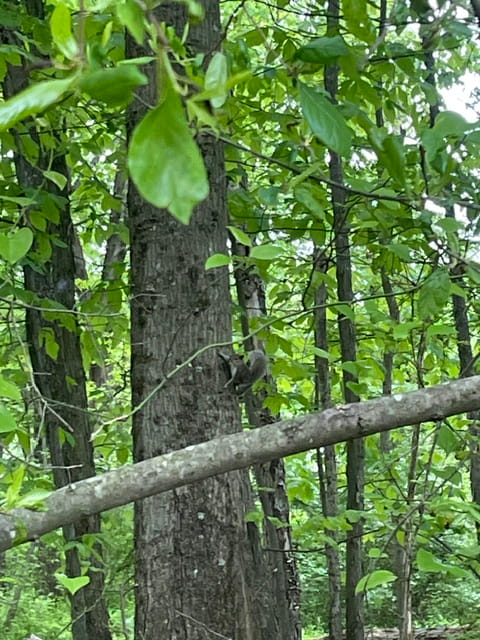
The Call Is Yours
If it hasn’t been apparent thus far, I can’t make a solid call one way or the other between air gun vs. shotgun as the appropriate tackle for chasing bushytails. There are very clear advantages to both and I have definitely spent a fair share of time toting each in the fall woods.
My recommendation is simply to try both. If you’ve never gone after squirrels with a scattergun or an air gun, change that this upcoming fall.
Stay safe.
~The Eclectic Outfitter